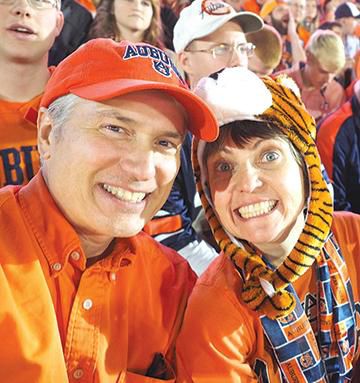
Gretchen Yost is busy. We all claim to be busy, but “busy” is a relative term. Most can’t fully appreciate what a busy person, like Yost, can accomplish in a limited amount of time. Yost is a part-time veterinarian at the Española Valley Humane Society, the same shelter where she was the medical director from 2007 to 2012.
The work at the shelter can be a hectic place, to say the least. On her busiest days she is toggling duties between performing surgeries and administering care to the animals in the shelter.
“Not only are you taking care of the shelter animals that might be sick, the adoption appointments, the foster appointments, but you are also doing the surgeries,” Yost said. “So those are very busy days.”
Her day begins just before 8 a.m. Immediately there are people at the shelter to drop off their animals for surgeries. Most will be spayed or neutered, a service the Humane Society offers at little or no cost to the owner.
The service is important to curb the over population of animals in the area. The Humane Society receives over 4,000 stray animals each year that do not have any good homes. These animals are left out on the street because there are not enough good homes for them. This leads to disease outbreaks and other public safety issues.
Current Humane Society veterinarian Carolyn Fletcher said, “It was especially important here because, unlike the other parts of the country where spay and neuter is something you just do, here it’s something people don’t think as readily about.”
As the animals arrive, Yost and her staff will receive them, weigh them, take their vitals and place them in a holding area. She will meet with the owners to counsel them on the procedure. Afterwards she will give each surgical candidate a full exam; take its temperature, listen to the heart, check the breathing and ensure that each animal is healthy enough for surgery.
“It’s a very physical time of day because there are 100 pound dogs that come in. (It) takes two of you to get it in the cage, or to hold it to get the temperature,” she said.
At the same time she has to be aware of any animals the public brings in or ones animal control drops off. During those times she will stop what she is doing, inspect the animals that have just arrived and then return to examining the animals being prepared for surgery.
An act of faith
Yost was born in Auburn, Ala. and lived there until she was about 1 year old. From there she moved to Melbourne, Fla. until the she was seven and then relocated to Tampa, Fla. before leaving for college.
Yost attended Auburn University where she initially started as a chemical engineering major. She enjoyed math and science so she thought that would be a good fit for her. That changed when she attended a career seminar one night.
“I went to a presentation and they passed around this gooey substance for us to look at. I was holding it, touching it and looking at it, and I remember thinking that I can’t spend my days working on this,” Yost said.
After that night she decided to change he major to electrical engineering.
“My boyfriend at the time was an electrical engineer so I just decided to switch my major to his major,” Yost said. “I make decisions for the strangest reasons sometimes.”
Yost graduated from Auburn in 1987 and then moved back to Florida to work at Florida, Power and Light as a distribution engineer, deciding how much power needed to be delivered to particular areas.
Yost describes herself as methodical, strategic and thorough, qualities that any good veterinarian must possess. However, there are times in her life when she simply took a chance, defied both comfort and convention, and allowed herself to make a different choice. It was during one of these moments that her life began to take shape.
Yost did not start as a veterinarian, like many other of her colleagues. She was actually an electrical engineer by training and making good money doing it. However, she wanted a career that she felt would be more fulfilling.
Florida, Power and Light, was going through a series of layoffs, a waking point for Yost, and she began to think about what she was passionate about and she found that she had a special place in her heart for something much different than engineering.
“I have always had a soft spot for animals,” Yost said.
The layoff was a starting point to a new career for her. Between layoffs she began preparing for veterinary school. She started taking biology classes, chemistry classes, and other prerequisites. These were classes she has not taken since high school.
She left and went to veterinary school, moved to New Mexico, worked at a small animal clinic in Española and then transferred to the Humane Society.
She made the point she will never recover from the career transition financially. Not only did she spend money on tuition and books but she lost the money she would have made as an engineer. It was a good living, she said. It would have been a stable profession that would have sustained her for a very long time. The more practical choice for her was to remain as an engineer. However, she wanted a career she was passionate about and not one that could simply sustain her.
Community
involvement
Yost is at the Shelter three days per week. This allows her the time to pursue her other passions, such as volunteering for non-profit agencies, championing the arts and taking her talent as a veterinarian and her love for animals to places and people that need her help.
A non-profit she volunteers for is the Rio Arriba Adult Literacy Program. It is a new program, two years old, that provides individual tutoring services for adults who are unable to read. She tutors one person for two hours every week.
“I love teaching,” Yost said. “And that whole one-on-one thing with someone who wants to better themselves by learning how to read sounds like a great thing.”
She currently tutors a young student. They were paired because her student loves animals. Yost gave her a list of books to read, mostly animal books, because that was what interested her. The book would serve as a spring board for vocabulary, reading comprehension, writing exercises.
The other non-profit Yost volunteers for is the San Martin de Porres Soup Kitchen. According to its website the Soup Kitchen was founded in 1992. It is open five days per week and serves lunch to 50 to 80 people. It also provides food baskets to needy families in Northern New Mexico.
Once a month Yost prepares meals and serves them to needy individuals in the Valley. She begins at 9:30 a.m. to prepare lunch, sometimes from scratch, other times the food has been donated from the different casinos in the area. Customers will start arriving at 11:30 a.m and she will serve them until noon and will stay after serving to clean up.
“It’s not like something where you don’t see the direct result,” Yost said. “You have done it. You have served a meal and that’s great.”
One of Yost’s passions is opera and she tries to share it with anyone she can. Yost is part of the Española Opera Guild, a fan club for people who enjoy the theater. The Guild will assist in bringing artists to the community to sing or perform, put on lectures to educate the community and host various events throughout the year.
“We support the educational and community outreach part of the opera,” Yost said
The Guild recently sponsored an essay contest where winners were offered tickets to a dress rehearsal for a performance. Before the show the children were treated to a dessert reception that included hand-made cupcakes, chocolate-covered strawberries, and ice cream.
Always the
veterinarian
At the Shelter the technicians are preparing the anesthetics and generating records of each animal while Yost prepares all of the necessary surgical equipment.
If time permits, she will take a quick tour of the facility and tend to the dogs and cats already housed at the shelter. She’ll make sure they’re healthy, and check any animals about which staff has concerns. If there are concerns, she will treat them as best she can before she begins surgery.
After preparing and checking each of the animals, surgeries will begin around 9:30 a.m.
“You have to get through them all and then they have to wake up, make sure everybody is healthy, good to go, to go home that same day,” Yost said. “You got to get into surgery. That can be a little harried but once that time hits that’s your focus.”
There are typically two beds in the operating room and as she is finishing the procedure on one animal her technicians are preparing the next animal on the vacant surgical table so the operation is one, continuous process.
Every so often an emergency case will arrive that will interfere with the flow. She will remove her surgery gown, examine the emergency case, treat the animal, and then regown and continue with surgery.
Surgeries are typically over at 2 p.m. and then it is cleanup time. She will perform surgeries on 15 to animals on any given day.
“So then you come out and everything is done and then it becomes the grand cleanup, to get all the laundry done, all the (gauze) packs done, everything sterilized, all the equipment cleaned, refilled and ready to go,” she said.
Owners begin to come back at 3 p.m. to pick up their animals. Yost and the shelter staff will counsel the owners, giving them instructions and providing them with directions for proper care.
After surgery she returns to checking the health of the animals in the shelter. Throughout the day the staff may ask Yost to examine additional animals they are concerned with. She will then inspect, prepare treatments and generate records for them.
Then there are animals the Humane Society fosters to households temporarily.
“We have to support all of those people that are volunteering, who have all of our animals,” Yost said. “What comes with that is we have to be there for those animals when they get sick.”
In some instances Yost will have to transport animals to a different facility to diagnose an injury or to complete treatment.
“And then sometimes, like yesterday, there was a cat with a broken leg,” Yost said. “We don’t have x-ray equipment at the shelter. I had to load up this cat and take it there (Cottonwood Veterinary Clinic) and do the x-ray myself, make sure it was good and come back to the shelter. You’re trying to fit that in somewhere too. If you’ve got blood work to do, you’ve got to get that done and shipped off. It’s just a lot of balls in the air that make for an exciting day. ”
Other
responsibilities
Aside from her everyday responsibilities at the Humane Society she has also taken initiatives to advocate for the shelter and its animals.
Pet Amigos is one example. That was developed by Yost when she worked full time at the shelter and is an outreach program designed to inform the public about the different services the Humane Society offers for owners.
Fletcher has taken the reigns from Yost and is in charge of the Pet Amigos program that Yost established.
“She (Yost) heard about the program at a veterinary conference and she decided that we needed to do this in Española. She felt that it was a priority for the shelter to have a community outreach program.”
The program involves bilingual “Ambassadors” who go door-to-door and talk to residents about the services the Humane Society offers. They inform them about the importance of spaying and neutering as well as vaccinating their pets.
The Ambassadors will also act as counselors, providing information to the public, fielding questions and concerns and observing how the animals are treated.
The Ambassadors will also attend community events where they explain the program to the public.
Yost also has a natural talent for numbers and statistics and uses her skill to generate statistics for the Shelter.
“That information helps us raise funds,” Fletcher said. It’s what helps us know how we’re doing. It’s what helps us get the word out about what kind of work we’re accomplishing, what kind of improvements we’ve made in the community and how many animals we’ve actually spayed and neutered and how many we’ve actually been able to get adopted out.
These numbers are important for reporting purposes when the Society applies for grants to fund its operations.
“It is a lot easier to get grant money and to talk to donors because most of the time donors want to know very specific things about your shelter,” Fletcher said. “A lot of funding is based on those numbers. It also helps us in terms knowing where we stand, how we are doing and where we need to focus our efforts better.”
Many of Yost’s colleagues describe her as resourceful, accomplishing a lot with very few resources while director of the Shelter.
“I can’t even believe the amazing job she did here considering, especially that most of the time when she was here, she was doing it 100 percent by herself,” Fletcher said. “It’s not typical to have just one veterinarian for the number of animals here. She was doing the high quality, high volume spay and neuter pretty much every day, as well as taking care of all of the shelter animals and doing things like maintaining writing and maintaining protocols.”
On the road
She will also travel internationally. For two weeks in July, Yost will also be using all of her experience and training to assist with animal care in Nicaragua. Yost will be working with World Vets, a non-profit organization that recruits volunteer veterinarians, technicians and nurses for animal care services such as spay and neuter, treatments for infectious disease and various other injuries.
One facility World Vets has is in Granada. The facility’s purpose is to train native veterinary professionals in surgical procedures, but for two weeks in the year the organization opens its facility, and allows United States veterinary students to train side by side with volunteer veterinarians. The training allows the students to get their surgical experience.
“I like the idea of opening my horizons that way,” Yost said.
Yost will be one of those volunteer instructors. She will be instructing eight veterinary students from the United States on various surgical procedures but mostly spay and neuter.
“The overpopulation problem is huge; strays everywhere and there’s not enough homes for them so there’s a lot animals that die, or are put to sleep, or shot down there, so that’s an effort to curb the overpopulation problem,” Yost said.
For the second week Yost will be volunteering with an organization her colleague established, working on two of the country’s islands where animals there do not have any access to medical services. Yost, along with other veterinarians, will establish a clinic and treat, at no cost, any animal that requires care.
“I think I am going to see a lot of animals with parasites; probably very thin, emaciated, pregnant, probably wounds that are trying to heal on their own, cancer that hasn’t been addressed,” Yost said. “That’s kind of what I think.”
The businesswoman
On top of all that she is also an entrepreneur. Yost owns and operates Angel Paws, a company that provides home euthanasia services for people.
“I have a little bag with all the equipment,” Yost said. “I know about what size the animal is so I pre-prepare. I try to do things quietly, slowly and with great care.”
Those are just her professional responsibilities. She also has different roles to play when she is with her friends and with her family.
“She is just a terrific step mom,” Her husband Norman Daggett said. “I have two kids. I have a daughter who is a third-year medical student at the University of New Mexico and Gretchen has had a very positive impact on her life. With any sort of schooling or career issues, or whatever, she turns to Gretchen and I for input and advice and thought and I know that is very important to my daughter.”
Gifts and lessons
Yost describes herself as self-reflective so she likes to look back on back on her life, the choices she made and the people she has met. To Yost it was never about the destination. To her, it was about the journey, the struggle, the perseverance, the goals she has accomplished and the work she has done.
She is not motivated my material things, especially money.
“She is driven to make a difference and if she learns of a need and she feels like she can make an impact on it then she tries to do that,” Daggett said. “Even in her volunteer work, she has one little task, but learns more information about the volunteer organization, and has ideas for how things could be better and they could do better, she’ll give that feedback.”
“I’ve always thought that these words from Abbey Road are so simple and so true,” Yost said. “‘And in the end, the love you take is equal to the love you make.’”
To Yost it is easier to maintain an optimistic view about people, the community and the possibility for great things when she is fortunate enough to feel love at home.
“My whole life I have been totally cheered on and loved unconditionally by my parents and my family,” Yost said. “With that kind of support anything is possible.”