A Team on Their Side

Published:

Santa Fe New Mexican

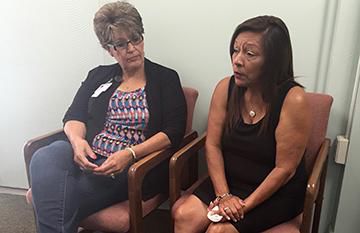
    Silver City, NM — Beatrice Resendiz grew up in this small town of miners, artists and college students near the Gila National Forest. A diabetic for years, she set aside her own needs to work, care for her four granddaughters and help minister to her Alzheimer’s-afflicted mother. Only when Resendiz ended up in the emergency room without vision in one eye, her left arm numb, did she pay attention to her own health. “I thought it was an aneurysm,” Resendiz said. “But it was stress and diabetes.”

    A similar fate befell Cynthia Marquez, who moved to Silver City from Houston in 2012. Several weeks later she ended up in the hospital, also diagnosed with diabetes. “I had no clue what was going on and I had nowhere to go,” Marquez recalled. “I could have died.”

    Both women credit their survival to Hidalgo Medical Services (HMS), a public health clinic which has set out to develop a model for delivering quality, affordable health care to rural communities.

- Advertisement -
- Advertisements -

    New Mexico needs such models. Of the state’s 33 counties, 32 suffer from a shortage of healthcare providers such as doctors, nurse practitioners and dentists.

    It’s hard to attract primary care providers to the state’s rural areas and harder still to keep them.

    Financing public healthcare poses another problem: Although the state’s Medicaid program has expanded, trips to the emergency room for non-emergencies such as colds and ear infections have increased. Costs ballooned from $99 million in 2014 to $116 million in 2015, according to New Mexico’s Human Services Department.

    HMS is well-positioned to address those separate but related problems. The non-profit group was founded by a coalition of community leaders, including health policy expert Charlie Alfero, in 1995 to fill the gap left by the closing of the only public health clinic in Hidalgo County.

- Advertisement -
- Advertisements -

    “We had a blank slate,” Alfero said. “We asked the community what they needed. Over time, we decided that primary care was medical, dental, behavioral health and social needs.”

    Although the group has grown in the years since, it hasn’t wavered from its long-term goal: providing a better health care delivery system focused single-mindedly on patients’ needs. Today, HMS provides primary care through 13 sites to residents in Hidalgo and Grant Counties.

    With an annual $16 million budget, HMS now employs more than 200 providers and support staff.

    So what makes HMS revolutionary? The clinic’s model has four main tenets: It involves building a health care team for each patient, expanding the number of medical residencies offered at the clinic, sharing an electronic record program among all providers and promoting health care careers to local youth.

- Advertisement -
- Advertisements -

    Studies have shown that such measures can help address health care shortages in rural communities.

    “Our vision is fundamentally about changing health care delivery across the state and the nation, not just in Hidalgo and Grant counties,” said Dan Otero, chief executive officer of Hidalgo Medical Services.

Teaming up for care

    Resendiz and Marquez monitor their diabetes daily, and will have to do so for the rest of their lives. It can be overwhelming to track blood sugar levels, diets, work, and doctors’ appointments.

    Fortunately, they each have a team on their side.

    In 2013, HMS created integrated health care teams at their clinics in Silver City and Lordsburg. Each patient has a primary care provider, who is assisted by a nurse, a medical assistant and a community health worker. The teams also work with behavioral health specialists and dentists.

    “The old-fashioned, hang-out-your-shingle with a physician, nurse and front desk receptionist isn’t enough (anymore),” said Dr. Joyce Troxler, a physician who serves as associate program director for HMS’ residency program.

    According to HMS staff, the team model is why clients missed only 9.5 percent of appointments in the last year, half the national average.    

    Central to the integrated teams are community health workers, trusted locals trained to educate people about basic health care, diabetes and nutrition. Community health workers have been around for years, but “they were never really accepted into the house of medicine,” said Dr. Arthur Kaufman, head of the Primary Care Physicians Consortium at the UNM Office for Community Health.

    Community health workers address the “social determinants” of health, such as transportation, food, home life and insurance. They are the front line, identifying all the issues that can prevent a patient from making appointments or following up on treatments. If the client needs a dental checkup, food stamps, housing, or help obtaining home care, the community health worker is there to coordinate.

    “We provide a lot of support and encouragement for people who find themselves stuck with a lot of problems,” said Marsha Rippetoe, the community health worker assigned to Marquez.

    Rippetoe helped Marquez get onto insurance quickly and qualify for a sliding-scale fee, acquire a machine for testing her blood sugar, and attend a diabetes education class. “I don’t know what I would have done without her,” Marquez said.

    Resendiz worked with Elva Quimby, who’s served as a community health worker for 13 years.     When Quimby saw her client falling deep into depression, she alerted the physician, medical assistant and nurse on Resendiz’s team.

    They quickly got Resendiz to a mental health specialist housed at the clinic.

    “Chronic diseases often come with depression,” Quimby said. “If they are depressed, they can’t get past that. Once we address the depression, it’s a lot easier for them to apply the diabetes education we give them. Bea was able to move on and help herself.”

    Thanks in part to their teams, both Marquez and Resendiz have cut their blood sugar levels in half.

    And they’re hardly the only patients who have benefited from the team approach. Quimby and Rippetoe estimate they each have contact with about 200 clients per month.

    That frequent contact also reduces hospital and emergency room visits.   

    Even better, HMS pays community health care workers from federal funds, creating more jobs in rural towns. HMS’ ultimate goal is to station community health workers at all 13 clinic sites in the two counties.

Designing delivery

    HMS didn’t merely construct healthcare teams — it also gave ample thought to how best to integrate them within its two-story clinic in Silver City, a health center that provides onsite mental, dental and primary care.

    In the clinic’s bottom floor, doctors review cases alongside medical assistants and nurses. Two doors down the hall sit community health workers. “Having a physician, medical assistant and nurse sitting side by side makes the work much more efficient,” said Troxler.

    The clinic houses a digital radiography machine, a bone densitometer, a small pharmacy and a urology lab. A small private lactation room is available to both clients and staff. Everything is situated to maximize communication, team-building and efficiency. Instead of sending a patient suffering from a sprained ankle to the nearest hospital for an X-ray, doctors at HMS sites in Lordsburg and Silver City can get the tests done down the hall.

    HMS also offers mental health services at nine of its 13 sites, so a doctor who realizes a patient is in crisis can provide what staff call a “warm handoff” to a counselor.

    Drawing the next generation of providers

Like many Western states, New Mexico has a tough time coaxing providers to rural and frontier areas.

    Jerry N. Harrison, executive director of New Mexico Health Resources, said fewer physicians are opting to open family health practices.    

    Making matters worse is that many of New Mexico’s remaining family physicians are nearing retirement. For the last four years, the state had the highest number of doctors over age 60 and the lowest under age 40, Harrison said.

    What’s more, all doctors must complete medical residencies before they begin practicing on their own. Those residencies are funded through Medicare at a cost of about $150,000 each.

    Arthur Kaufman’s group at UNM and clinics such as HMS have worked together to expand rural residencies, an effort now aided by funding available under the Affordable Care Act.

    They’ve created incentives such as medical school loan repayment and housing assistance to persuade physicians, physician assistants and nurse practitioners to move to places such as Silver City and Hobbs. HMS has three apartments built into the Silver City clinic for residents.

    The first two residents in the program just finished their three-year stints at HMS. According to Dr. Darrick Nelson, HMS’ chief medical officer, both now practice in rural Dona Ana County, where they represent three doctors in one, providing obstetric and pediatric care, internal medicine and geriatric care. “Family medicine doctors are trained to take care of families, cradle to grave,” Nelson said.

    HMS also promotes health careers to local middle school and high school students.

    “The best solution to solving the rural primary care provider services is to train people from and in rural areas,” said Nelson, son of a miner from a small Arizona town.

    The American Association of Family Practice backs up his claim. The Association found doctors trained in family medicine and from rural backgrounds are the most likely to set up practices in rural areas.

Coming full circle

    A 2013 New Mexico Legislative Finance Committee report called Hidalgo Medical Services an “effective community-based model which bring coordinated care to the neediest patients.”

    At a time when many rural places are losing their primary care providers, HMS has become more competitive than ever. According to Alfero, the Affordable Care Act’s emphasis on preventative care and outcome-based payments has generated a renewed interest in primary care and family medicine. Once, UNM had to scramble to find enough medical school students to fill the family medicine spots. Last year, Silver City had 1,100 applications for two positions. “That’s outrageously remarkable,” Alfero said.

    While rural health care has evolved from the country doc hanging a shingle outside an office, it still centers around providing the best care possible to patients in remote areas. “The HMS mission is focused on quality and comprehensive care,” said Nelson — not the bottom line. “It allows us to truly put the patient at the center of what we are doing.”

Related articles

- Advertisements -

Recent articles

- Advertisements -