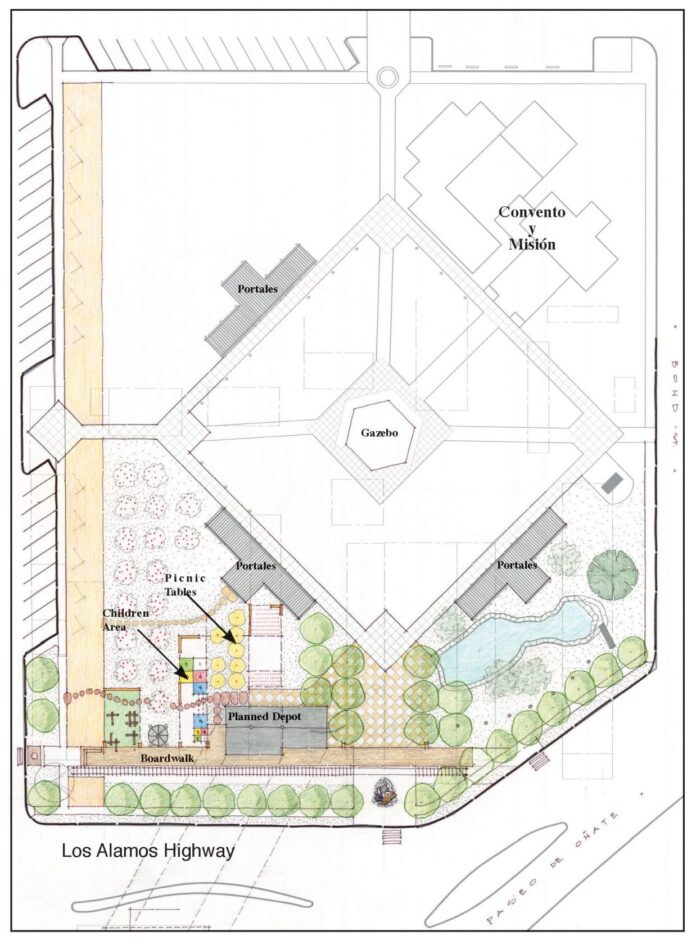
The Española City Council approved architectural plans Oct. 27 for a long-anticipated railroad museum that will cost the city between $41,000 and $382,000 more to construct than the city has in available funding for the project.
Plans for the museum were developed and presented by Santa Fe-based Atkin Olshin Schade Architects. These plans would place the museum site along the entire east side of the Española Plaza along the Los Alamos Highway and Paseo de Oñate. The outdoor/indoor museum would include a depot, a rail line, outdoor sitting and children areas and a boardwalk (see design drawing).
To make those plans a reality, the city will have to spend between $441,000 and $782,000 in construction costs, according to Atkin Olshin Schade’s preliminary budget. This does not include potentially $30,000 in annual operating costs to maintain the museum when it’s finished, Acting City Manager Veronica Albin said. A state Highway Department appropriation, which Albin said was intended to cover the entire cost of construction, only totals around $400,000 including the city’s 25 percent match.
The total cost of the museum will depend on the number of features city officials choose to build, which are outlined in three potential phases, chief architect Tony Atkin said (for a breakdown of each phase see box on page A2). Each phase is intended to further recreate an old-time railroad stop, complete with a depot, tracks and train cars. None of these phases includes any parking except those spaces already located at the Plaza and along East Hill Street.
The cost of all three phases together would be $781,908, according to Atkin’s plans. This is not including the addition of an actual steam engine and caboose, which the city intends to have donated, either from the Cumbres and Toltec Scenic Railroad in Chama or another source, Mayor Joseph Maestas said.
To cover the extra costs, the city is depending on additional funding from the state Highway Department, Maestas said.
After a meeting with unnamed Department officials, Maestas said those officials have indicated the Department supports the project and will provide an unspecified amount of additional funding. Department spokesman David Coriz confirmed that the meeting took place but would not confirm any further details.
Now that the city has a specific amount for which to ask, Maestas instructed Albin to set up a second meeting with Department officials to present the plans and request the additional funds.
This meeting should take place within the next two weeks, Albin said. Currently, city officials plan to request the entire difference between their current funding and the projected construction cost. If no additional funding comes through, the project will be far more basic than Atkin’s plans show, but will still happen, she said.
“We would do the essentials,” she said.
Councilors said little about the cost of the project, instead expressing strong approval of the concept Atkin presented and an awareness of what they called the city’s need to finish such a project. A railroad museum was included in a 1990 Plaza master plan, and Maestas in particular has been vocal about pushing the project in the years since then.
“I am very excited by what has been presented tonight,” District 1 Councilor Danielle Duran said. “We need to get better at bringing people into the area.”
In fact, the only Councilor to comment on the cost, Mayor Pro Tem and mayoral candidate Alice Lucero, said she was thrilled it would cost so little.
“To think that we can improve the (Española) Plaza, all under a million dollars is incredible,” she said. “Nothing makes me happier than to see people utilizing that Plaza.”
Atkin said he wanted to design the museum to take advantage of the history of the area as well as make it an inviting place for people to come.
The museum will commemorate Española’s old stop on the Chili Line railroad, which ran between Santa Fe and Antonito, Colo. The Española stop is generally credited as the reason for Española’s development and prosperity throughout the late 1800s, and is the reason for the inclusion of a train in the city’s logo.
The entire project nearly went down the proverbial drain earlier this year when the city missed an Aug. 14 deadline required by the Department for submitting design plans because officials could not determine whether they could legally use the value of the 1.78-acre museum site as their 25 percent funding match. The funding was saved by doling it out in two portions: the design funds in 2009 and the construction funds in 2010. The Department has officially approved using the land value as the city’s match and the project is on-schedule to go out for construction bids in January, Albin said. Actual construction should begin in spring 2010 with a yet to be determined completion date, she said.