
Continue Reading
Subscribe for full unlimited access, log in to your account, or create a free account for complimentary articles.

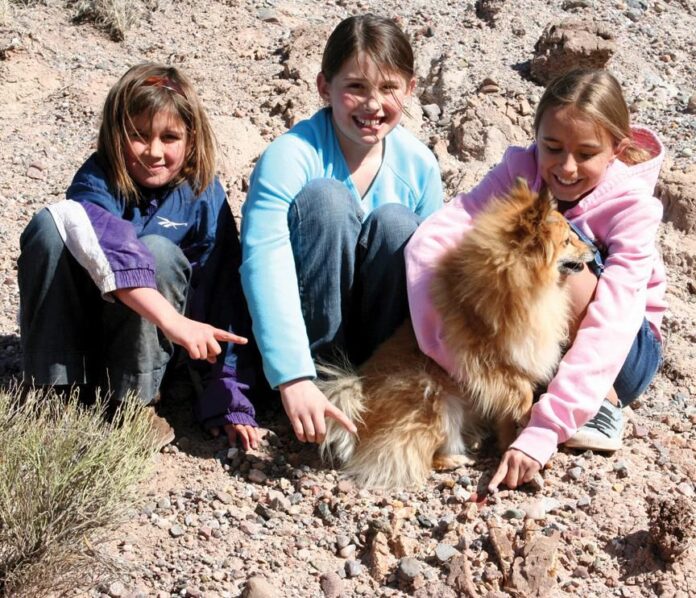
(Photo submitted by Jim Vogel) Fourth grader Makaela Vogel (right) posed with her classmates Evita Salazar (left) and Sienna Ginn (center) and the family dog, Poco, after finding petrified bones belonging to a “three-toed horse” that is estimated to have lived in the area 12 to 15 million years ago.
Lorem ipsum dolor sit amet, consectetur adipiscing elit. Sed do eiusmod tempor incididunt ut labore et dolore magna aliqua.
Ut enim ad minim veniam, quis nostrud exercitation ullamco laboris nisi ut aliquip ex ea commodo consequat.
Subscribe for full unlimited access, log in to your account, or create a free account for complimentary articles.
Copyright © 2026 El Rito Media, LLC. All rights reserved.
Access your digital subscription
Don't have a subscription? Subscribe now →
Create a free account to read complimentary articles, or log in if you already have one.
Want full access? View subscription plans →
Want full access? View subscription plans →
Your free account has been created.