Whose Water Pipes Are They? City Seeks Answers

Published:

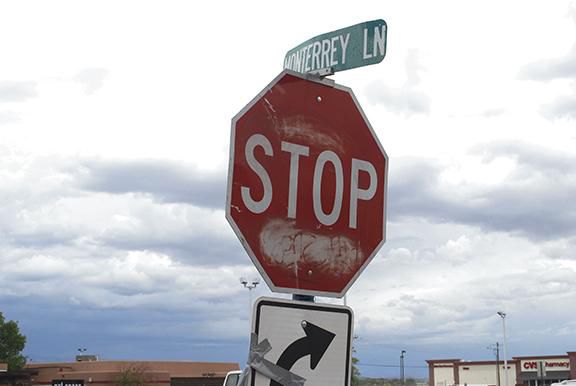
Debate at the Aug. 6 Española Public Works Committee meeting grew contentious over a resolution to replace a water line on property owned on Monterey Lane by former Councilor J.R. Trujillo and real estate developer Walter Gould.

The resolution to replace the faulty 1-and-a-half-inch line with an 8-inch line passed through the committee by a vote of 3 to 2 and will now face a vote at an Aug. 12 city council meeting.

Arguments were complicated by the presence of Trujillo, who attended the committee meeting as a representative of his property. For large portions of the discussion, the debate was dominated by arguments between Trujillo and Councilor Robert Seeds. At one point, Trujillo approached Seeds’s seat and began arguing over the table with the councilor.

Even as Trujillo returned to the audience, neither side budged on the issue. Seeds maintained that Trujillo’s property used to be owned by Seeds’s father-in-law, when it was serviced by a private well. Therefore, Seeds argued, the precedent was set for the water pipes to be privately maintained. Councilor Peggy Sue Martinez joined Seeds in opposing the project, reminding the council that Prince Drive was still in need of a sewage system and should take priority over a project on private land. 

Trujillo argued that the city was obligated to pay for the pipe replacement because city maintenance crews had always previously repaired the series of leaks that have plagued the current pipe. 

City Manager Joe Duran only seemed to back up Trujillo’s point. According to Duran, the water pipes were originally created for private use by phone company ConTel. When ConTel closed, the pipes’ easement was acquired by the city, though Duran wasn’t able to locate the supporting documents. Regardless, said Duran, the city had set a precedent and had to act on the Monterey Lane pipes. Every time the pipe sprung a leak, it was costing the city $1,400.

“Either we fix it and send him a bill or it’s ours,” said Duran.

Despite Seeds’s and Martinez’s protests, Councilors Pedro Valdez, Cory Lewis and John Hernandez all voted to draft a resolution that would be presented at the next city council meeting.

The debate over the Monterey Lane pipes was immediately preceded by a debate about Monterey Lane itself and the narrow entrance that forces residents to pass through the Baskin-Robbins drive-thru.

The city council’s discussion clearly suffered from the absence of City Attorney Frank Coppler, who was supposed to make the presentation. In his stead spoke Planning and Zoning Director Russell Naranjo, who said he had not fully studied the issue. He presented to the council a satellite image of Monterey Lane. In marker, the Planning and Zoning Department had closed off the current entrance and drawn in three proposed entrances on Highway 68 and Fairview Lane. The proposed Highway 68 entrance is just south of the current one while the two Fairview entrances were just east of the intersection. 

Seeds expressed frustration that the Planning and Zoning Department had approved of the current entrance in the first place. 

“This thing just doesn’t function properly. That’s just fact,” Seeds said.

Naranjo explained that the New Mexico Department of Transportation had originally sealed off the entrance. Then employees in the Planning and Zoning Department wrote letters to the Department on behalf of the city council to reopen the Highway 68 entrance to accommodate Baskin-Robbins when it opened. 

Martinez also showed concern about the easternmost proposed entrance on Fairview Lane. She thought that it ran too close to houses and would affect those residents’ privacy. Naranjo agreed and reminded her that those entrances were only proposals.

No word was given on when the current Monterey entrance would be closed or any new entrances would be built.

Related articles

Recent articles