Little Leaguers Denied Chance to Play All Stars

Published:

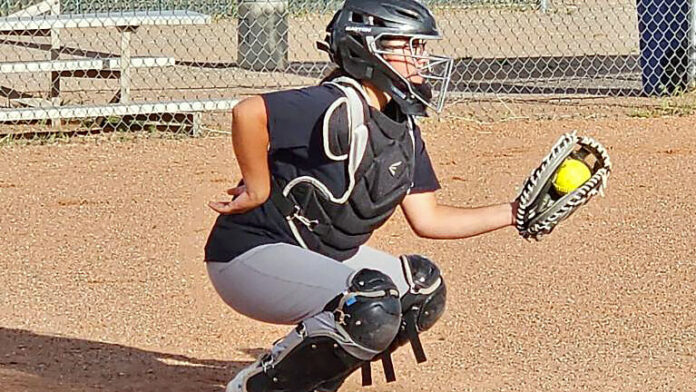
Sofia Mondragon was taken aback by the first pitch, which almost knocked her down.

The 11-year-old catcher was receiving from a new pitcher, from a team she had played against during the season, who threw harder than she had caught before. Soon, at the Española softball little league all-star team tryouts, she got a feel for the faster pitcher, and was excited to have a new teammate.

But at the end of a day of pitching, batting, fielding, running and more, Adrianna Velasquez, a parent who was set to co-coach the all-star team, was surprised by what she heard from the Little League Board and President Pamela Alcala in a conversation with other board members and coaches.

While Velasquez was unable to recall exactly what words were said, the gist of it was that there were five solid players, and the remaining seven “weren’t up to the all-star standard,” and that Alcala did not want to send a team to the all-star tournament just to lose.

“And that kind of ticked me off,” Velasquez said. “I get that, maybe not all of them performed as an all-star team. But, it’s Little League. They’re not going to perform in all stars to go and get a D-I or D-II scholarship for all stars. They’re going to show up there, to play as a team. And all those little girls who showed up that day felt like they had what it took to be on an all stars team.

“So, to be told that it would be a waste of time to send these girls,” Velasquez said. “Even if that was a thought, (the board) probably should have kept it to themselves.”

In all, Española Valley’s Little League finished the year with no representation in the district all-star little league competition. The baseball tournaments are currently taking place in Las Vegas, and the softball tournament finished last week (Las Vegas won in the 10-12 division). Parents of athletes had complaints about the way the board handled the entire process, which resulted in the young athletes feeling robbed of a chance to compete.

Alcala told the Rio Grande SUN that they could not send all-star teams because they did not receive any information from the district office in Las Vegas after the districts changed for this year (though Los Alamos and Pojoaque were both able to send teams). She also said that a major factor was that 12 players would not be enough to field a team, and that they would need 13 or 14.

Gilbert Mondragon, the father of Sofia and 9-year-old Eve, who assisted under Velasquez through the year, said that he was able to get in touch with the Las Vegas district office as soon as he tried, and got answers to questions. But, not having a position on the board, he was powerless. He also said that 12 was more than enough players to field a team.

Mikayela Krylowicz lives in Española while she and her husband work in Los Alamos. They opted to have their two children play in Española’s Little League this year, but they were so dismayed by the board’s actions throughout the year that she plans to have them play next year in Los Alamos.

During the season, four Española teams, with about 15 players each from around Rio Arriba County, played against each other and against a pair of Pojoaque teams and two from Los Alamos. Games were held at Industrial Park fields, as well as at locations in Pojoaque and Los Alamos.

On June 3, a Saturday afternoon, 12 softball players from the Fusion, the Dirt Divas, and the Lady Warriors, between the ages of nine and 13, came to Industrial Park’s fields. (A fourth team, the Game Changers, did not participate in the tryout as they have their own travel schedule.) Coaches had selected the best players from their teams, and everyone who showed up knew they had to be fully committed to the team. They assumed that, given the turnout, all 12 would ultimately make the team, and the ‘tryouts’ would be a day of practice.

Two of the 12 athletes were 13 years old, and had played with the league through the year. The parents thought, given what the board said, that they would be able to get a waiver to play with the younger league, even if they were above the age limit.

Before the season, the league considered holding a ‘Juniors’ league which would have been for 12-14 year olds, but there was not enough interest, so the 13-year-olds were allowed to play in the “Majors” league, which, according to the Little League website, is for 9-to-12 year olds (the culmination of that age group in softball is the Little League Softball World Series in Greenville, N.C., and is broadcast nationally).

Krylowicz was impressed by the way everyone was able to hit off of one of the assistant coaches, who she said pitched college softball. But she said that the board members, who have final say over who makes the team, seemed disinterested during the day, not opening a notebook or keeping track of the individuals. Alcala told the Sun that they discussed with coaches who the top players were based on how they performed both during the season and in the tryout.

Word of Alcala’s comments about the players’ skill level quickly spread from coaches to parents to their children, who felt like they were told they were not good enough.

“Our daughter … she cried an entire evening when she found out what had happened,” Krylowicz said. “I’m pretty shocked that someone like that has been allowed to be the president that is representing our community and our children.”

“I was pissed,” said Mondragon. “Who are they to say?”

Three days after the tryout, a Zoom meeting was held with the board along with parents and coaches.

Minutes into the meeting, I was asked to leave the Zoom. Previous Little League Board President Anthony Sanchez, who was on the meeting, said it should have been open to the public.

Parents had asked Sanchez to join the meeting to verify information from the board, as they felt the board was giving false information.

And was there any information in the meeting that he thought was false?

“Actually, everything they said,” Sanchez said. “They blamed the district, and it’s not the district, and the paperwork, it’s the same paperwork that’s done every year … That paperwork has been the same since I was president. Nothing has changed on the requirements for all stars. So, that was false information.”

Alcala maintained in a phone conversation that paperwork had changed, and would not be feasible to be completed successfully.

During the meeting, the parents in attendance were increasingly surprised and upset by what they heard. At one point, multiple board members seemed to say that the point of fielding an all-star team was to be competitive, and it was not worth sending a team if they would lose in the first round. Parents strongly disagreed with that idea.

“You want to represent your community,” Velasquez told the Sun. “Of course, you want the best of the best players to go. But, I also felt like those 12 little girls that were there, they believed in themselves, that they believed to be on an All Stars team, and go and represent Española Little League.”

“The girls just want to play,” Krylowicz said.

Velasquez and Mondragon pointed out that this goes against the Little League mission statement, which says to “build stronger individuals and communities,” not to win championships.

“Every one of those kids felt important,” Mondragon said to the Sun. “All stars, it is a big deal. It’s about going, having fun, playing somewhere new, against other players, other teams that they’ve never met. And trying their best, and trying something different. And if they got kicked out of the first round, they got kicked out. They went and they enjoyed it. They tried.”

“I take pride in our kids,” Sanchez said. “You want to send a team just to show what we’ve got. Sometimes we win, sometimes we lose. But we still want to send somebody to represent us, as a city and as a community.”

To Mondragon, it seemed like they kept trying to make excuses to not field a team, from uniform issues to paperwork to money. And when he or Velasquez tried to address each of them, including offering to put up the money, it would be brushed off. There seemed to be confusion on a number of issues, including the age players had to be.

“It seemed like they just gave us the run around,” Mondragon said. “To avoid doing for our kids. To me, they took from our kids. You shouldn’t have ever had a try out. ‘Cause now our kids think, ‘Hey, we have a chance at this.’”

Three days after the meeting, on June 9, the Little League board sent an email to parents stating that “EVYSBL will not participate in All Stars this year.” Krylowicz was disappointed that it seemed to be a simple form email, and not a phone call or any personal message to the parents.

In the email, the board mentioned a variety of factors, from the regional office in Waco, to waivers to poor communication with the district headquarters in Las Vegas, to age limits (“Unfortunately, during our Softball tryouts we only had 12 girls show up and only 10 met age requirements.”) Mondragon said that he thought that 10 players was enough to form a full team for the tournament, even if the two 13-year-olds could not be cleared.

“We have encountered too many uncertainties preparing for All Stars and feel we would not be properly prepared for our teams to play to their fullest potential,” the email reads. “We submitted waivers and are still waiting on the final decisions. There is no guarantee Waco would even provide us an answer before the beginning of All Stars or the season … We sincerely apologize and hope to be able to participate in the future.”

Alcala also told the Sun, “We didn’t want to take them to La Plaza (where the district tournament is being held, in Las Vegas), so that we would injure our girls.” She also said that the board feels unsupported by the city and the mayor’s office, and that the city’s fields are in ‘disrepair’ and ‘unacceptable condition.’

Mondragon conveyed a point that is often felt in Española, that athletics, win or lose, can be an escape from drugs and from the darker parts of the area.

“I’d rather see them on the field losing,” Mondragon said. “Than on the street, getting high with friends.”

Velasquez expressed the sentiment from many parents of a frustration with the board, feeling like they were not doing everything possible to provide the best opportunities for the young athletes.

“If you’re not in it for the kids,” she said, “Why be in it at all?”

Related articles

Recent articles