Adios, Dr. C

Published:

Four years ago, the Española School Board hired a new superintendent, an outsider, to take over its embattled district.

    The Board charged David Cockerham with turning around a District rife with overdue and over-budget construction projects, almost two dozen legal complaints related to special education and a growing number of schools on academic probation. And he was indisputably an outsider: a doughy and jovial Anglo in a majority Hispanic school district, with no political or family ties in a valley where politics and family are everything. He is also a Republican in heavily Democratic Rio Arriba County.

    Even after the Board showed Cockerham the door in June 2008, cutting his contract short by a year, his tenure lasted almost as long as his past three predecessors combined. His last day was June 22, and come Saturday he plans to be on his way to a new home in Texas.

    Cockerham arrived in 2005 promising academic improvements, less violence in schools, effective construction management and an overhaul to staffing policies. He acknowledged at the time it would be a challenge. Looking back four years later, his success was mixed, even by his own judgment.

    Under a new special education director Cockerham recruited from Colorado, lawsuits dropped from six filed between 2004 and 2006 to just one filed since.

    Standardized test scores have improved in most schools. For that, Cockerham credits his proudest accomplishments: sending 100 or more teachers to math and science training, and requiring schools to closely track academic data. Yet under the ever-rising standards of No Child Left Behind, more schools face corrective action for under-performing test scores today than when he arrived.

    Cockerham said any other outcome was impossible. 

    “The bar rises every year,” he said. “We can never catch up. The law wants all students reading at grade level within 10 years. It’s impossible for all the students in all the schools to meet that goal.”

    Construction remains a thorn in the District’s side.

    A $3.6 million addition to San Juan Elementary arrived in June 2007, “way past deadline” according to Cockerham himself. But it was a quality project, he insisted. A new Alcalde Elementary, three years overdue when Cockerham arrived, still exists only on paper.

    Cockerham described the problem as a “money issue.” The District has lost out on state construction funding the past two years, in one case due to dysfunctional maintenance on its existing facilities. Two attempts by the Board to pass a bond or mil levy have failed since 2002.

    Cockerham describes among the biggest hurdles cleared during his tenure bringing stability to a District accustomed in the past to handing out jobs based on family, friendship and political patronage. He points to new policies of hiring and retention based on written job descriptions and typing tests for clerical staff.

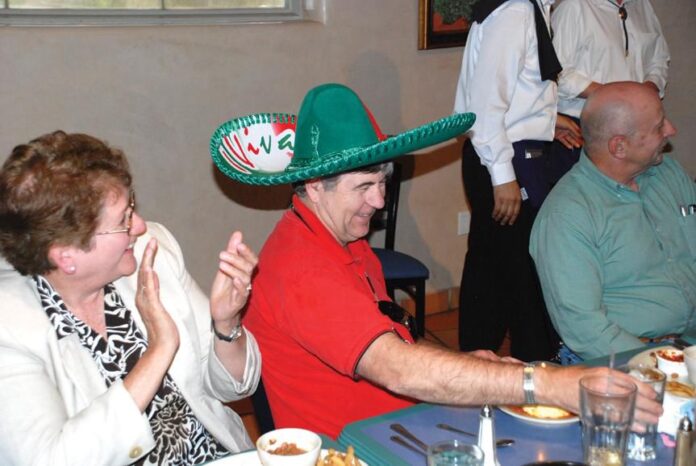
    As Chimayó Elementary Principal Wilfredo Aguilar put it at Cockerham’s retirement dinner June 11, “Before, I used to have to check in the SUN to see whether I still had a job. With Dr. C, that hasn’t been the case.”

    But those same policies made Cockerham a polarizing figure, often politically at odds with Board members and with employees “inherited” from past administrations, he said, but declined to say who those employees were.

    Just before Cockerham’s arrival, the state passed a law that stripped Board members of hiring and firing power. But that never stopped them from asking for favors, he said. He insists he never bent, not once.

    “What I told them, and they all agreed, is that anyone is free to apply and they will be considered as long as they’re qualified,” he said. “If all other things being equal, it happens to be that person they’re asking about, that’s fine, it’s two birds with one stone. But they have to be qualified.”

    But even as the state threatened to withhold funding unless the District staffed its Maintenance Department with new, licensed staff, the current Board resisted change. They insisted on “hiring local” and promoting employees who lacked required licenses. An attempt last year to make vast changes to the District’s administrative hierarchy was met by mutiny from long-time — and politically active — employees, including Transportation Director Sennie Quintana and Title One Director Evelyn Maruska. It was soon overturned by the Board.

    And attempts to keep a fledgling employee union at bay with a highly-paid union buster earned Cockerham the contempt of many teachers. Looking back, union president Brian Every said it had the unexpected benefit of galvanizing employees to finally ratify the union in late 2007.

    “(Cockerham) was our greatest recruiter,” Every said. “His policies caused more employees to want to join the union than anyone previously. It was because he made policies without allowing employee input and he applied discipline with a heavy hand for even the most minor issues.”

    Every added that politics still prevailed under Cockerham, except they focused around him. The people getting plum jobs went to those who know Cockerham, instead of those who know Board members.

    It may have been partially due to such political friction that the Board moved up his retirement date from summer 2010 to this month. On his way out, the Board doubled the injury by requesting a special audit to find what some Board members described as “errors” and “fraud.” Cockerham visibly restrained himself from lashing out at that.

    “Every citizen has the right to speak, even Board members,” he said. “I’m sure I’ll be vindicated.”

    Cockerham said he expected his dismissal. Assuming it would happen sooner or later was how he dealt with political pressure.

    “I came in here understanding I was ready to retire, expecting to work my way out of a job,” he said. “The only way to do it was to ignore all that stuff and focus on what’s real important to me, on what I care about and what matters, and that’s the kids.”

    Controversy aside, one thing was clear about Cockerham — he did care. Employees toasting his retirement referred to his round-the-clock work schedule and the hands-free headset perpetually on his ear, ready to take calls even after hours.

    And asked about one persistent problem that has changed little since he arrived — violence in schools — Cockerham wept, openly and profusely.

    “I hurt for our community,” he sobbed. “It hurts the children the most. Oh, I wish I could just do something, I don’t know, hug all of them, adopt them. I hope I did everything I could. I stay awake and pray about that, I really do. I just wish I could do more.”

Related articles

Recent articles