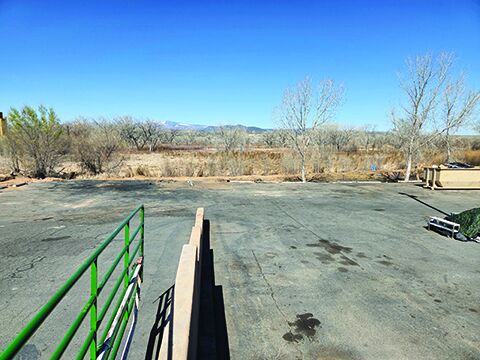
Staff at the Española Pathways Shelter has fully dismantled a tent encampment in the parking lot, eliminating a fire hazard and relocating dozens of individuals.
In December, there were approximately 60-70 tents in the parking lot, prompting Española Fire Marshal Pablo Montoya to declare it a severe fire hazard. Pathways, Española’s only low-barrier emergency homeless shelter, responded with its Winter Essentials Program, supported by United Way and the Los Alamos Coalition to End Homelessness, reducing the tent count to 18 by January.
“We responded to the fire threat by bringing in an emergency case management team and we increased security,” Pathways Executive Director Dena Moscola said.
By March 28, the encampment was entirely cleared.
“Our clients understood our need to disband the encampment and all left peacefully,” Moscola said.
Through the work of case managers, the individuals occupying the parking lot were not cast out. Twenty-nine people entered drug treatment, nine reconnected with family, eight are awaiting treatment beds, and others are finding out-of-state shelters or alternative locations, Moscola said. Since February 2024, Pathways facilitated 52 mental health referrals and 35 external shelter placements. Partnerships with more than 35 organizations, including Compassion Through Action’s resource fairs and Southwest Care’s health screenings, supported these efforts, Moscola said.
Española Assistant Fire Chief John Wickersham confirmed on April 21 that no tents currently occupy the parking lot. Total vacancy, however, was not always the end goal, he said.
“The initial thought was to get them (the tents) down to a lower, manageable number,” Wickersham said. “But that wasn’t obviously working.”
One incident that sparked the movement to reduce the number of tents due to fire hazard was one in which a woman living in the parking lot suffered facial burns from a fire. The fire risks caused the fire department, in conjunction with Pathways, to alter the game plan; all the tents had to go.
“Once that big fire happened … we didn’t want any tents at all down there,” Wickersham said. “The hazardous conditions that we saw down there … we just mandated it that we didn’t want any tents at all down there.”
Another fire broke out on March 30, allegedly started by a few unauthorized campers who had returned to the parking lot following the March 28 clearing. For Pathways and the fire department, this underscored the risks and necessity to clear the parking lot’s occupants and keep them out. Currently, the March 30 fire is still being investigated, Wickersham said.
“We do have a person of interest and our fire marshal is pursuing charges,” he said.
Staff now enforces a no camping policy, backed by clear consequences. Unwelcome visitors will — at the discretion of Pathways — be met with a police escort off the premises and possible trespassing charges, Wickersham said.
To further discourage future camping, the shelter is installing a perimeter fence, to deter those who come to the shelter with “harmful intent,” Moscola said. Pathways also plans to advance a Code Blue policy to protect the unhoused during the extreme cold, drawing inspiration from Santa Fe’s model, which activates when temperatures drop below 15° F, snowfall exceeds six inches, or freezing rain occurs. Santa Fe’s policy includes outreach by the Alternative Response Unit, overflow shelters, and coordination with warming centers and transit services. Española’s Code Blue policy will be tailored specifically to Española’s unique needs, Wickersham said. Progress has been stalled by an unfilled post-overdose response position, but the coming months promise warmer weather and therefore a decreased need for the Code Blue policy. Wickersham hopes to have the Code Blue policy in place by next winter.
Pathways serves 30 to 80 people daily with meals, showers, case management and peer support, and provides overnight shelter for up to 20 individuals during winter. More than 85% of clients are local, Moscola said, refuting claims the shelter attracts outsiders.
Pathways’ work, including 62 treatment placements and more than 40 Narcan administrations last year, underscores its impact.
“We had a gentleman come to our door accusing EPS of not doing anything to help anyone,” Moscola said, describing a skeptic who, after volunteering, entered rehab and is now sober, housed, employed, and even owns a vehicle. “My door is always open.”