‘Trout Waters’ Protect Fish

Published:

Drawing on the state’s iconic chile culture, the New Mexico Department of Wildlife has designated “Special Trout Waters” across the state to protect native trout and help grow trophy-sized fish for anglers to enjoy for generations to come.

“These waters are designated as Red Chile, Green Chile or Christmas Chile waters, each with its own combination of catch-and-release rules, tackle restrictions and bag limits,” said Dela Joyner, northern New Mexico spokesperson for the Department of Wildlife.

Breaking Down the Colors

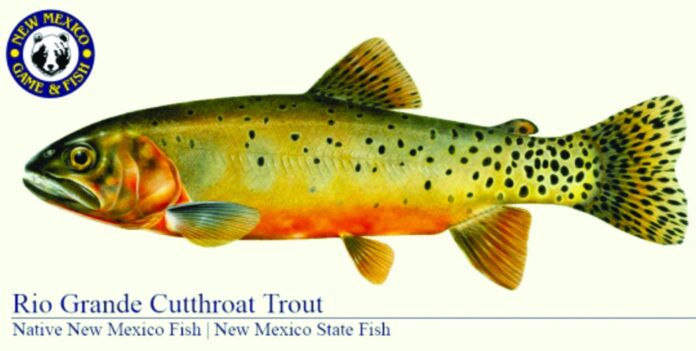
Brian Beaudoin, president of the New Mexico Trout conservation organization, said red waters are designated catch-and-release areas to help protect New Mexico’s two native trout species, Rio Grande cutthroat trout in the north and Gila trout in the southwestern part of the state.

“These are streams that have been worked on and deemed critically important for these fish,” Beaudoin said.

Conservation groups such as New Mexico Trout assist the Department of Wildlife with habitat restoration and removal of non-native trout from fishing waters in northern and southwestern New Mexico, according to Beaudoin. He said trout removed from lakes and streams would go through DNA testing and a barrier would be placed blocking the non-native fish from returning.

“Then they can go back and restock it with either cutthroat or Gila trout while we are working to get those populations reestablished and sustaining,” he said.

Restocking can take from one to five years, Beaudoin said, depending on how quickly the native fish population increases through natural reproduction.

“They’ll want to see if there is any reproduction based on surveys for fish numbers and size,” he said. “They may elect to say, ‘we need to stock this more’ or ‘we were planning on stocking this for a first year, second year or fifth year but the natural reproduction is so good we’re not going to the fifth year; we don’t need to.’”

During the restocking process, Beaudoin said, “they do not want people taking fish. Usually there are some type of tackle restrictions.”

Trout flies and lures and single barbless hooks are allowed in the red waters, he said. “The barbless hook helps with the removal of the fish, which would return to the water quickly and (left) unharmed as possible.

Joyner said a barbless hook can be made with a treble hook lure, which has three hooks, and a pair of pliers.

“Simply cut off the two extra hook points to create a single hook, then flatten the barb using your pliers,” she said.

Beaudoin said green chile waters include recovered and quality waters. Quality waters are designated river and lake sections managed by the Department of Wildlife and recovered waters are lakes and rivers undergoing recovery efforts of certain species.

“You’re allowed to keep two fish per day. But there are still two tackle restrictions, usually being no bait and no single barbless hook,” Beaudoin said. “That way, if you want to continue fishing, you can release fish or you can release fish up to the point that you keep your two fish and then you’re done for the day.”

Christmas waters have a bag limit of two fish per day, Beaudoin said. “They can be caught and kept through legal methods – that’s flies, lures, bait. It’s a little more open there.”

Related articles

Recent articles

Fire Cause Revealed