High Waters

Published:

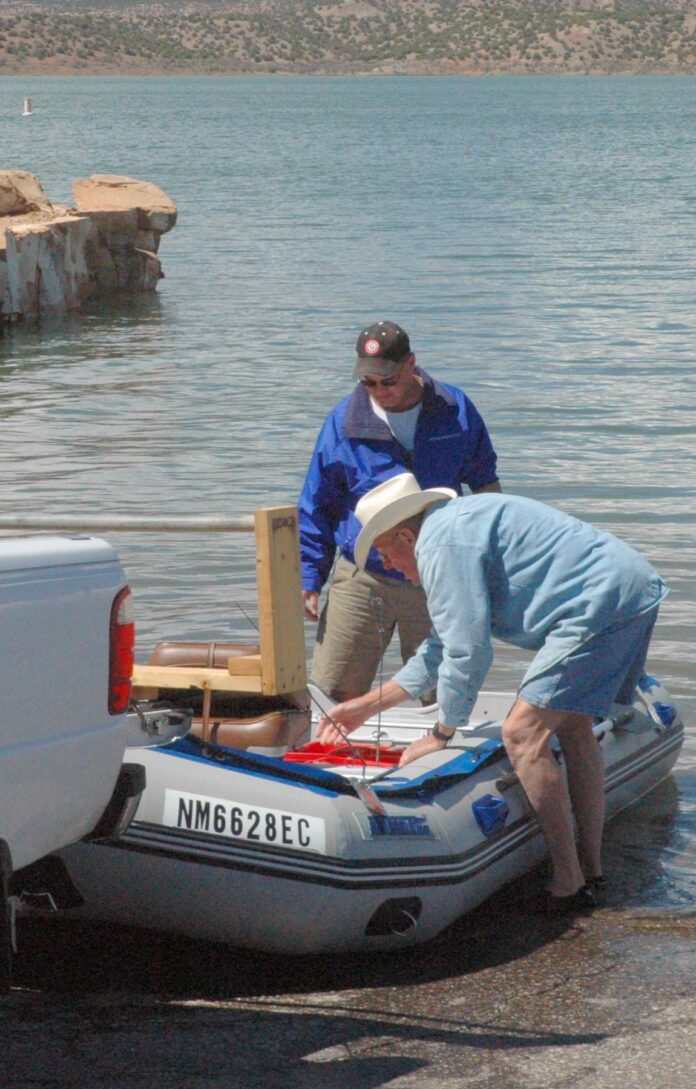
Picnickers heading to Abiquiú Lake this week may find their favorite table inaccessible — and more than a bit waterlogged.

Army Corps of Engineers Operations Manager David Dutton said water levels peaked late last week following an early-May release from the El Vado Dam upstream.

“We’ve absorbed that high water and we’re starting to go down,” Dutton said.

Dutton said water levels should return to normal by the middle of next week. In the meantime, fishermen can enjoy great walleye and bass fishing, both from the shore and in boats. But swimmers and boaters should be careful, Dutton said.

“It does create a safety hazard because the shoreline evaporates,” Dutton said. “It just goes underwater and then non-swimmers and poor swimmers step off and they’re in trouble.”

For boaters, the main danger is hitting submerged objects near the shore.

The disappearing picnic tables apparently haven’t dampened the springtime crowds at Abiquiú Lake. Dutton said given the struggling economy, he thinks more local residents are staying close to home.

“This year, visitation-wise, we’re about five percent ahead of where we were this time last year,” Dutton said. “And last year was a banner year — we had over a million visits to the project. We’ve never surpassed that number before, and we’re ahead of that number already this year.”

While Abiquiú Lake is draining, Heron Lake is filling up. Heron Lake State Park Superintendent Anthony Marquez said Monday the lake was about 85 percent full and rising by roughly four inches per day.

Stay Out, Mussels

As the summer boating season gets underway, state and federal officials are renewing their efforts to keep the invasive quagga mussels and zebra mussels out of New Mexico’s waterways.

“The whole idea is try to prevent them from getting established,” Dutton said. “They’re not in the Rio Grande system yet.”

As a preventative measure, officials have been endowed with broad new legal authorities.

During the 2009 session, state legislators passed a bill giving state and federal law enforcement officers the authority to impound any aquatic equipment if the owner refuses to submit to an inspection and the officer has “reason to believe” that an invasive species may be present.

Law enforcement officers also have the power to tag any equipment known to be carrying an invasive species or departing from infested water. Tagged equipment could not enter any body of water in New Mexico without being decontaminated.

The new law also carries criminal penalties. Anyone knowingly possessing or transporting an aquatic invasive species into the state, or even knowingly introducing an untreated boat that has been exposed to infested waters, can be charged with a petty misdemeanor. Subsequent offenses are misdemeanors.

Dutton said the invasive mussels are tiny and can stow away in boats’ bilge water or storage tanks for weeks. In addition to a statewide education campaign, Abiquiú Lake will conduct weekend boat inspections, with a special focus on boats that have been out of the state, he said. Quagga mussels have already invaded waterways in Colorado, Utah and Arizona, according to the United States Geological Survey.

“As the summer progresses, this will become more and more a part of boater’s lives,” Dutton said. “They can expect that their boats will be inspected.”

Marquez said Heron Lake is monitoring boats for mussels and invasive weeds from Colorado, but the state’s main focus is on Navajo Lake and Elephant Butte Lake, the two bodies considered most vulnerable.

to interstate contamination.

Related articles

Recent articles