Prosecutors Want Evidence and Homicides Used in Murder Trial

Published:

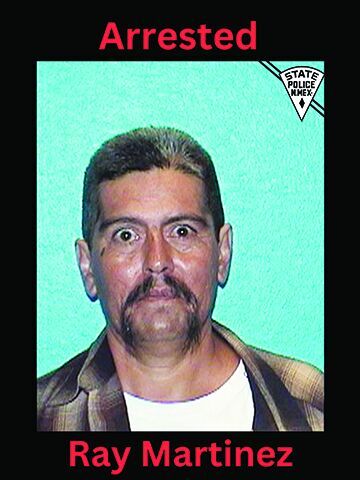
Prosecutors are seeking to have evidence of Raymond Martinez’s past incarceration and two separate homicides used at his murder trial over the objections of his defense attorney.

Martinez is accused of fatally shooting his neighbor in 2023 following an argument. He is charged with first degree murder, child abuse and felon in possession of a firearm for the July 2023 killing of Joshua Montoya, a father of five.

Last July, he was transferred to the Los Lunas prison as his health was in “significant decline” and jail officials wanted him released or moved to a facility with an infirmary.

Martinez, 54, has been held without bail since he turned himself in to New Mexico State Police, after District Judge Jason Lidyard found him a danger to the community on July 12.

State Police were called at 7:30 p.m. on June 17, 2023, to House 151 on County Road 101 in Chimayó for two people fighting in the driveway. Once at the house, police ordered them back in their houses and left, according to police reports.

Soon after, they resumed their fighting and Martinez allegedly shot Montoya twice. He stumbled into his home, where he ultimately died on his kitchen floor from a gunshot to the head, according to police reports.


Past prison time

In 1998, Martinez pleaded guilty to voluntary manslaughter and in 2015, to a drunk driving crash that killed his father, Ray Martinez Sr., according to court documents.

In January, prosecutor Arwen Gaddis wrote that she intends to use “evidence of other acts” against Ray Martinez Jr. at trial. She described the evidence as:

“Evidence of Defendant’s previous incarceration, belief in a moral code system he adopted during incarceration, and the Defendant’s willingness to pursue vengeance against the decedent for disrespecting Defendant’s wife,” she wrote. “The State intends to present this information through testimony and law enforcement body camera footage.”

In a response filed at the end of April, Ray Martinez Jr.’s attorney, Susan Burgess-Farrell, asked Lidyard to exclude any evidence related to his past time in prison.

“Such evidence is categorically prohibited by Rule 404(b) of the Rules of Evidence and the government has provided no legal support for the admission of such prejudicial and inflammatory evidence,” she wrote.

Rule 404(b) states: “Evidence of other crimes, wrongs or acts is not admissible to prove the character of a person in order to show action in conformity therewith.”

A slew of court cases have mostly ruled against allowing evidence of prior bad acts and a 1992 case cited empirical studies that “uncharged misconduct is generally ‘one of the most damning species of evidence.”

Prosecutors can’t meet the threshold needed to admit the evidence, Burgess-Farrell wrote.

“First, the State has not established that belief,” she wrote. “Second, there is no causal tie between any such belief and any elements of the offense. People believe in all sorts of things. That doesn’t equate to a state of mind to committing a crime. The proffered evidence has very little if any probative value that a jury could rely upon.”

A jury would likely be “very influenced” by evidence of his past time in prison and a 1996 case is analogous, where prosecutors tried to enter evidence of prior drug transactions in a separate drugs prosecution, Burgess-Farrell wrote.

“Likewise, here if evidence of Martinez’s prior incarceration is admitted, the jury will unavoidably infer that, since the defendant is a criminal and therefore also committed the offenses charged,” she wrote.

Prosecutors have not responded to Burgess-Farrell’s response and Lidyard has neither ruled nor set it for a hearing.


Case pushed out again

A status hearing and jury selection hearing for May were canceled after, in March, the judge set a new scheduling order, pushing jury selection out to Aug. 11, following a pretrial conference the same day.

Related articles

Recent articles