Rio Arriba Boasts Avian Abundance

Published:

Bird watchers may overlook New Mexico as a destination, but the Land of Enchantment boasts at least 523 different species. Rio Arriba County is a prime location to view a couple hundred of these species, because of its location and because of the extensive riparian areas along the Rio Grande and Rio Chama.

Rio Arriba sees a major northern migration of songbirds, shore birds and waterfowl that follow the course of these waterways during their spring journey to nesting and breeding areas. In the fall, those same species retrace the route back to wintering grounds in Mexico, Central America and South America, according to Tom Taylor of the Sangre de Cristo Audubon Society.

Some of these birds travel impressive distances. The majestic sandhill cranes, whose distinctive melodic calls can be heard overhead in early spring and early fall, nest and raise their young near the Artic Circle. These cranes fly high and can be hard to spot even if you hear their calls.

Canada geese have taken up year-round residence at the San Juan Fishing Lakes, in Española, and Abiquiú Lake. You will likely hear their loud calls before seeing these birds.

There are other species that spend the entire year in New Mexico. Several varieties of sparrow are common at winter bird feeders, as are colorful finches and red-winged blackbirds. The blackbirds are most common in cattail swamps along the Rio Grande, inside Española city limits.

As the weather warms in the spring, one of the most colorful migrants is the western tanager, a songbird often seen along the Rio Grande near Ohkay Owingeh, according to Taylor. The male tanagers are easy to spot because of their bright colors — a red head on a yellow body, with black wings.

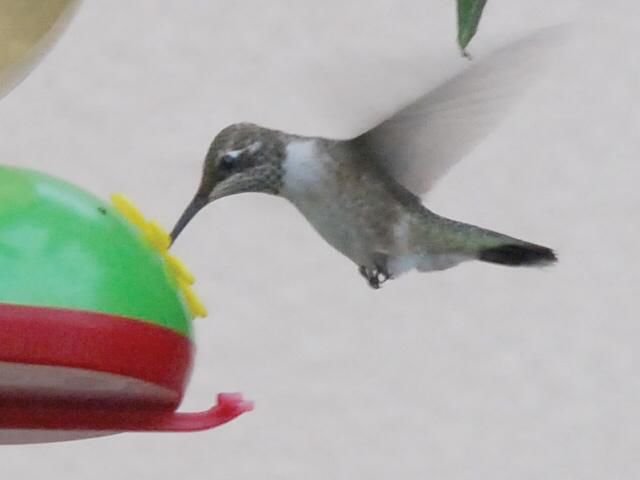
By now, several varieties of hummingbirds have also migrated north. The most commmon species in Northern New Mexico are the broad-tailed and black-chinned varieties. Hummingbirds spend the summer in New Mexico in habitat ranging from lowland riparian areas, such as the Rio Grande, to high mountain spruce-fir forests. They migrate south in September.

Raptors like hawks and owls are common along river banks as well, since they use tall cottonwoods as vantage points from which to spot their prey. The great horned owl is one of the more impressive raptors that can be spotted in New Mexico.

Mourning doves will fly to the river for one final drink before roosting for the night, and lately the newly arrived Eurasian collared dove has been making an appearance. At dusk, a cattail swamp along the river will resonate with the calls of many species.

El Vado and Heron lakes host breeding pairs of ospreys during the summer. If you keep a sharp eye out, you may be rewarded with seeing one of these raptors snatch a fish from the surface of the lake. The annual OspreyFest will be held July 10-12 at Heron Lake.

Away from the lakes and rivers, you may spot a rare roadrunner inhabiting the foothills and grasslands between the river and the mountains — though New Mexico’s state bird is relatively uncommon in Rio Arriba. Scaled quail occur infrequently in a similar habitat. Piñon jays can be found in the piñon/juniper forest, while the migratory band-tailed pigeons like to feed in the scrub oak patches a bit higher in the mountains.

Higher elevations are also home to blue grouse and Steller’s Jays. Grouse are popular gamebirds and the jays are bold feeders. They like to hang around picnic areas where they will snatch crumbs right in front of you.

With over 200 species of birds having been recorded in Rio Arriba County, we’ve barely scratched the surface of the birding experiences that are available.

If you’d like some help tracking down birds, the Sangre de Cristo Audubon Society will host its “Española Area Vertical Mile of Birding” field trip June 20. (see box, B1) On a really good day, 100 species of birds can be recorded.

Related articles

Recent articles

Weave a Mug Rug