City Goes Green, Saves Green

Published:

   People love to save money and when it comes to city finances, interim City Manager Joe Duran is just like everybody else.

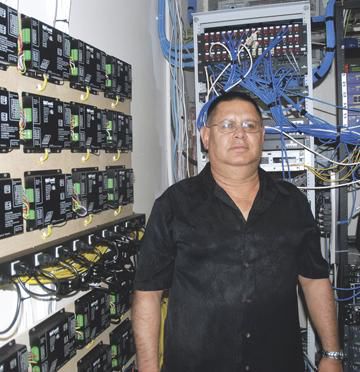
    City taxpayers are reaping the benefits of a newly installed way to heat and cool city hall. It’s out with the old boiler and swamp coolers and in with a new geothermal heating and cooling system.

    The city is saving about $3,500 per month, or half of the average city hall electric bill, since the system was installed in November 2010, according to city electric bills supplied by the city manager.

     Duran said the total project cost $597,000, which included a new roof and resurfacing of the parking lot at city hall. Federal stimulus dollars, or an Energy Efficiency and Conservation Block Grant from the U.S. Department of Energy, paid the majority of the cost at $451,000, The city’s match was $145,000.

    “It’s extremely nice to save money and be able to have something to show for it,” Duran said. “The profit can go toward other expenditures where needed.”

    Gone are the space heaters used by many city hall workers. Individual thermostats were installed in 27 zones giving office workers the ability to set the thermostat between 70 and 74 degrees, Duran said.

    “Employees are more productive,” Duran said. “They can set a comfortable temperature in their own environment or office.”

    In addition to the cost savings, the city manager also pointed to increased employee productivity, the ease and quietness of the system, plus a decrease of green-house gas emissions as benefits.         The system automatically starts working at 7 a.m. and shuts off at 7 p.m., Duran said.

    “If somebody forgets to lower the thermostat, we don’t have to worry about it,” he said.

    The city should break even on the direct cost after a little more than three years, or 41 months, said Duran. The total cost for the system designed to last for 30 years should be recouped within 14 years.

    “This can be used anywhere in the country to save energy and uses an alternative source of energy,” Duran said. “It’s one of the smartest things you can do. I wish other agencies, casinos and schools would look at the system. I hope the federal government gets more serious providing funding for alternative energy.”

    Russell Buras, president of the 28-year-old business Loop Tech in New Waverly, Texas, worked on the Expañola system and said his company has installed similar geothermal systems at the Las Cruces city hall, an Albuquerque school, and in Clovis and Ft. Sumner. Buras said 2 to 3 percent of climate control systems use geo-thremal heating and cooling and the market is huge and growing by 30 percent yearly.

    “It’s fun, a great product,” Buras said. “We were doing green before green was cool. The challenge is education.”

    Buras said architects, engineers and customers need to learn more of the benefits of geothermal heating and cooling.

    “It’s not sexy like solar panels or wind power,” Buras said. “You can’t see it.”

    What the taxpayers and city hall employees can’t see is underground,” Buras said. “Water circulates through closed pipes.”

    The pipes go 300 feet beneath the repaved city hall parking lot, reaching soils at temperatures of 60 to 70 degrees, Duran said.

    Using the ground and recycling water as an exchange, the system economically pushes air with a fan across heated coils in the winter and reverses the process taking heat out of the building during summer months, Buras said.

Related articles

Recent articles