Political Power and US Growth

Published:

It seems like a decade has happened this past month, from Nicolás Maduro being captured in Venezuela to President Trump’s rhetoric on the conquest of Greenland. Maduro says he was kidnapped. Some say it was a misuse of military power. The EU nations claim President Trump is destroying NATO to assuage his ego, which is demanding Greenland come under U.S. control. Like it or not, politics has always been and remains a power game of negotiations.

Let’s take a little trip back in our history. James Monroe was a Founding Father, Ambassador to France, Secretary of State, Secretary of War, Virginia Senator and Governor, and our fifth President. His Monroe Doctrine of hands off our hemisphere, remains a foundational pillar in our foreign policy. As President, Monroe saw the need to allow Latin American countries  to establish independence, free from further influence of European colonizers. His Doctrine has been invoked by Presidents Ulysses S. Grant, Theodore Roosevelt, John F. Kennedy, Ronald Reagan and Donald Trump.

William Seward was President Abraham Lincoln’s Secretary of State, serving in that post during the Civil War. In 1867, Britain occupied Canada. Russia owned Alaska, was broke and feared Britain would take Alaska by force. Secretary Seward quietly negotiated the sale of Alaska to the U.S. for $7.2 million. A pretty good deal.

In 1848, the U.S. was at war with Mexico over its domination of much of the Southwest. The Treaty of Guadalupe Hidalgo ended the Mexican-American War and transferred 525,000 square miles to the United States, including California, Nevada, Utah, Arizona, New Mexico and parts of Colorado and Wyoming.

- Advertisement -
- Advertisements -

In 1844, presidential candidate James Polk ran on “54-40, or Fight,” promising, if elected, he would annex the Oregon Territory, which was claimed by Spain, Britain and the U.S. Polk’s promise of territorial expansion based on Manifest Destiny got him elected. 

In 1846, the U.S. was at war with Mexico and President Polk had no intention of also fighting Britain, but he knew supplying British troops in the far Pacific northwest, would be difficult. 

So, he negotiated a settlement at the 49th parallel, which gave us Oregon, Washington State, Idaho and parts of Wyoming and Montana.

Polk had foreseen the war with Mexico. He knew Mexico considered the treaty of Velasco invalid. While it was signed in 1836 by President Santa Anna, when his army was defeated at San Jacinto and granted Texas independence, it was signed under duress. Polk knew the annexation of Texas in 1845 would likely start a war, which he also knew the U.S. could win and the vast area of Texas became a state. In 1848, Mexico finally ceded Texas along with the other gains of the Guadalupe Hidalgo treaty. For these territorial gains, James Polk is considered the most effective one-term president.

- Advertisement -
- Advertisements -

In 1803, President Thomas Jefferson feared that France, under aggressive leader Napoleon Bonaparte, might close the strategic port of New Orleans and strangle commerce for the westward expanding United States.

Jefferson went to work, creating authority to buy foreign territories. He knew Napoleon had a slave rebellion in Haiti, a threat of war with Britain and no money in the French Treasury. 

As Secretary of State, James Monroe was President Jefferson’s principal negotiator with France. Jefferson sent a delegation headed by Monroe to Paris and the U.S. bought 828,000 square miles for $15 million. No war. The Louisiana Purchase was just a good real estate deal.

Today, those upset with President Trump over his bid to acquire Greenland from Denmark need to understand how the U.S. became the world’s dominant power. 

- Advertisement -
- Advertisements -

What President Trump has done to protect our borders, expel illegal immigrants, protect our national security, the right of citizenship, our national defense and public health is nothing new to our history. It is America First and that is not new.

The media is quick to point out his approval rating has taken a dive to 42.5%. However, he has good company with our last three presidents who also occupied 42-43% at the end of their first year. 

Republicans rate him at 90% approval. Congressional job approval is now 22.7% with disapproval at 66.3%.

The U.S. became the nation we are by dealmaking. Some may not like the tactics of President Trump, but he will find good company in the history books.


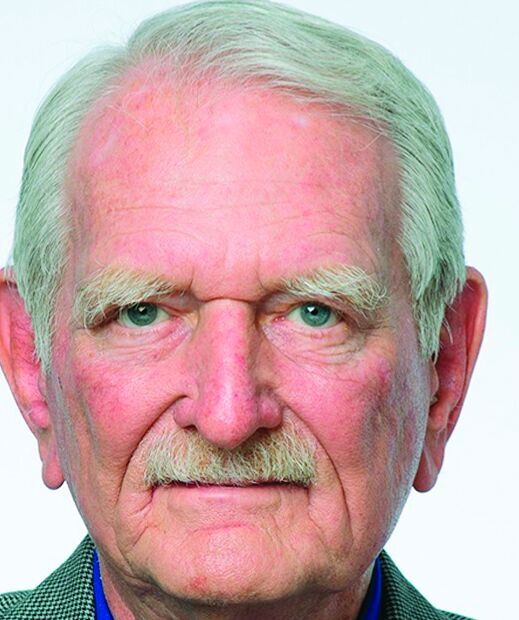
Tom Wright is a Santa Fe columnist and an El Rito investor.

Related articles

- Advertisements -

Recent articles

- Advertisements -