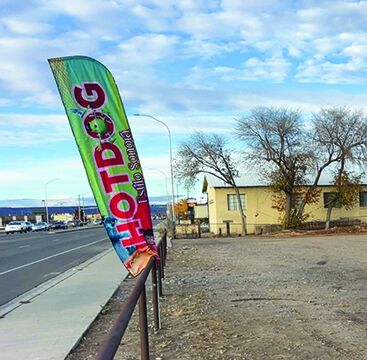
Many Ordinances That Are Being Enforced are Not New
The city of Española code enforcement team has been busy.
Over the last several weeks, they have been contacting business and home owners to let them know that they are out of compliance. The notices, sometimes left posted on a property, let people know about any compliance issues for things like overgrown weeds or improper signage.
“There were complaints that the councilors felt that our code enforcement team wasn’t doing enough, so we have been very aggressive with code enforcement,” City Manager Lauren Reichelt said.
Many of the ordinances being enforced are not new and have been in city code for years, but the move is catching people by surprise because they have not always been enforced.
Over the last several months, city councilors have called for more aggressive enforcement of several codes. In October, the council passed three new laws targeting the city’s homeless population. These included an ordinance regarding encampments on public property like parks and sidewalks, squatting on private property and the use of shopping carts.
District 4 Councilor Justin Salazar Torrez has been a vocal proponent of these ordinances. He was the driving force behind one that requires businesses to collect shopping carts taken from their properties, and has also publicly asked for stronger enforcement of rules about yard maintenance and landscaping.
The city’s current approach misses the mark, District 4 Councilor Samuel LeDoux said. He and Salazar Torrez are calling for enforcement of these newer ordinances that deal with things like encampments.
Reichelt said there has always been complaints about encampments. Her approach is to address them by working with law enforcement, treatment providers and the hospital to help unhoused people get medically assisted detox services and off the street, especially now that it is getting cold.
“We have been, especially when they’re dangerous, removing encampments, but that’s not going to resolve our issue with the unhoused,” she said.
Reichelt and LeDoux agree that if city code is out of date, it needs to be amended by council.
“If city council wants an ordinance not to be enforced, I think they should take it off the books,” she said. “They make the ordinances. My job is to enforce them, so we’re doing all of them. I am not picking and choosing which ones because they’re all ordinances and they are all there for a reason.”
Codes
Article Nine of the city’s code specifically addresses signs. It is lengthy and has 22 sections that go into detail about what is, and is not, allowed.
Rules for private and public property, political signs, advertisements for special events, temporary signs, public rights-of-way, size and specifics for things like wireless telecommunications are covered.
For example, temporary signs for things like yard sales cannot go up more than seven days early, must be removed within 48 hours after it is over and cannot be located in a public right-of-way.
Political signs cannot be posted more than 30 days before an election on private and public property, on vehicles and must be removed within five days after the election.
Some of the ordinances were created in response to industries that are no longer present in the city, LeDoux said.
He specifically cited parts of the city code regarding temporary signage for sales and grand openings that was created in response to practices at car dealerships.
Often, the dealerships would put out giant signs, flags and moving inflatables. The law is very specific, for example, and states that you can only have sale and grand opening signs displayed no more than one block from your business for a total of 15 days out of any three-month period.
LeDoux said his concern is that the message being sent to business owners is unclear. A local restaurant owner told him that the packet left with them by code enforcement officers referenced a political sign ordinance.
This creates confusion for business owners during a time many of them are already struggling, he said.
Reichelt said the goal of code enforcement officers leaving notices and reaching out to the community is to help them come into compliance, not to punish them.
“We’re working on weeds,” she said. “We’re going to have a shopping cart round up. We’ve also been talking to business owners about signage so signs are allowed. We encourage people to have signs. We just want permanent signs where there’s not a danger that they’ll blow into the road and hit a car or be waving and distract or obstruct traffic.”
Anyone who has questions or issues regarding the enforcement of ordinances should contact the city, she said.
City code also has a remedy. People can apply for exceptions with the city’s planning director, which are reviewed by the Planning Commission.
According to the city code, exceptions can include things like sign area, dimensions, location and any other sign characteristics.