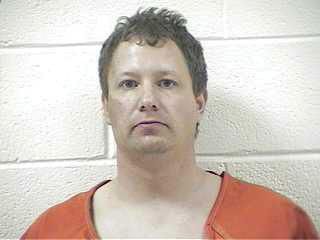
Drug May Have Played Role in Kaiser’s Death in Jail

Published:

    Rio Arriba County Jail Guard Henry Gallegos found the body of Lawrence Kaiser Feb. 4, 2007, at 10 a.m. in a holding cell in the jail’s booking area.

    University of New Mexico psychiatrist Richard Barendsen had prescribed the anti-psychotic drug Seroquel to the 38-year-old inmate Dec. 13, 2006, the day Kaiser was booked into jail. Barendsen routinely saw jail inmates — and routinely prescribed them powerful psychiatric drugs to sedate them — as a contract doctor at La Clinica del Pueblo de Rio Arriba in Tierra Amarilla.

    Unlike many inmates taking Seroquel, Kaiser, a manager of a Raley’s grocery store in Taos with no previous criminal history, had actually been diagnosed with a serious mental illness, according to court documents. (He had been arrested in Española after he allegedly claimed his wife and son were the seeds of Satan and attacked an Española Police officer.)

    Barendsen recommended Kaiser be moved to a hospital and prescribed him Seroquel, according to court and jail records.

- Advertisement -
- Advertisements -

    But according to a memo written by Assistant Jail Administrator Larry DeYapp, when he contacted the state psychiatric hospital in Las Vegas about Kaiser, he was told the hospital was not designed to be a detention center and that getting Kaiser admitted there would be “really difficult.”

    Kaiser subsequently became lethargic. His appetite waned, a known side effect of Seroquel use. (Some Seroquel users experience increased appetite.)

    He refused to eat, former jail supervisor Lydia Garcia recalled. Garcia could not recall whether or not he was taking his medications, she said.

    “I kept writing in my supervisor paperwork that he needed medical attention,” Garcia said. “Two days before he died, I took him some Skittles (candy) and a pop. He got up and ate a few skittles. When he died, I cried and cried. He didn’t need to die. I would find his breakfast, lunch and dinner trays in his cell. Nobody had even opened the door to take out the trays. I knew he was going to die.”

- Advertisement -
- Advertisements -

Lawsuit

    Lawrence Kaiser’s widow Laura filed a wrongful death lawsuit Feb. 10, 2009, against Barendsen, the jail and the County in federal District Court.

    “I haven’t filed discovery (but) we’re looking at Seroquel’s side effects,” Laura Kaiser’s Albuquerque-based attorney Rob Perry said. “I’m not a clinical person or a chemist but I can read as well as the next guy. A lot of the side effect warnings for this drug say that if it’s prescribed, there should be close monitoring, and that blood clots are a known risk factor. Barendsen came up from UNM and prescribed him Seroquel to sedate him. He went into a tailspin. He didn’t eat, didn’t get up or recreate, and ultimately, he died of deep vein thrombosis.”

    Deep vein thrombosis and pulmonary emboli — blood clots — are listed in Kaiser’s autopsy as the causes of death.

- Advertisement -
- Advertisements -

    University of New Mexico psychiatrist Richard Barendsen refused to comment on any specific patient he treated at the jail, though he expressed regret that La Clinica had not more closely monitored his patients.

    “I think we could’ve avoided some situations if we did a better job of seeing people,” Barendsen said.

    The County is an innocent bystander in the lawsuit, County Manager Lorenzo Valdez said.   

    “They haven’t served us with the (lawsuit) complaint yet,” Valdez said. “But my understanding is that the doctor is the primary target of the suit, not the County. We did all we could for the man (Kaiser). He was receiving medical care.”

    But Perry said that’s incorrect. The lawsuit blames the County and the jail for failing to provide adequate medical care, Perry said.

    “We name them both as defendants, partly because we don’t want the County passing the buck to the doc,” Perry said. “The County was grossly negligent.”

    The Kaiser lawsuit’s complaint sues for unspecified damages for wrongful death and pain and suffering.

    Jail officials claim Kaiser would not take his Seroquel pills.

    A staff memo written by Jail Administrator Bidal Candelaria the day after Kaiser’s death states that Candelaria had received verbal reports from jail staff since mid-January that Kaiser had been refusing to take his medications.

    Public records requests for supervisors’ written reports from January 2007 have not yet been fulfilled by the County or jail.             Kaiser’s autopsy and toxicology report do not mention any tests for Seroquel. The autopsy identified the causes of death as deep vein thrombosis and pulmonary embolism (blood clots), and declared these to be evidence of a “natural” death.

    But Seroquel and other antipsychotics can trigger Neuroleptic Malignant Syndrome, according to the federal Food and Drug Administration. The syndrome  can cause fever, altered mental status, irregular heartbeat, loss of appetite — and deep venous thrombosis and pulmonary embolism, meaning blood clots of the legs and lungs, respectively.

    “The prescription for Seroquel was noted on the field report, so the OMI did know about it,” state Office of the Medical Investigator Director of Operations Amy Boule wrote in an email. “However, the autopsy revealed death by natural causes . . . so there was no reason to test specifically for Seroquel. If the autopsy did not reveal a natural cause of death and therefore a drug overdose was suspected, then an expanded tox screen would have been indicated.”

    Asked how the Office had ruled out Neuroleptic Malignant Syndrome in Kaiser’s autopsy, Boule wrote by email only that there had been no reason to suspect the Syndrome in Kaiser’s case.

    State Chief Medical Investigator Ross Zumwalt had reviewed the entire record on Kaiser, Boule wrote.

    “According to the field report though Mr. Kaiser had been prescribed and given Seroquel, he had recently refused to take the medication,” Boule wrote.             Boule added that the Syndrome cannot be diagnosed after death.

Related articles

- Advertisements -

Recent articles

- Advertisements -